
Audemars Piguet super clone
Showing 17–32 of 135 resultsSorted by popularity
-
 Audemars Piguet Royal Oak Tourbillon
Royal Oak Chrono 26240BA Frosted 41mm YG/YG Gold/Black Dial APS SH4401 Super Clone
$1,450.00 -

-
 Audemars Piguet
Royal Oak Offshore Diver 15707 White Ceramic APSF 1:1 Best Edition SA3120 Super Clone
$1,450.00 -
 Audemars Piguet
Royal Oak Offshore Diver 15707 Black Ceramic APSF 1:1 Best Edition SA3120 Super Clone
$1,450.00 -
 Audemars Piguet
Royal Oak Offshore Diver 15710 APSF 1:1 Best Edition Black Checkered Dial Super Clone
$1,450.00 -

-

-

-

-

-
 Audemars Piguet
Royal Oak Offshore Diver 15720 SS/RU APSF 1:1 Best Edition Black Dial Ceramic Bezel Super Clone
$1,450.00 -
 Audemars Piguet Royal Oak Offshore
Royal Oak Offshore Diver 15720 SS APSF 1:1 Best Edition Blue Dial on Blue Rubber Strap Super Clone
$1,450.00
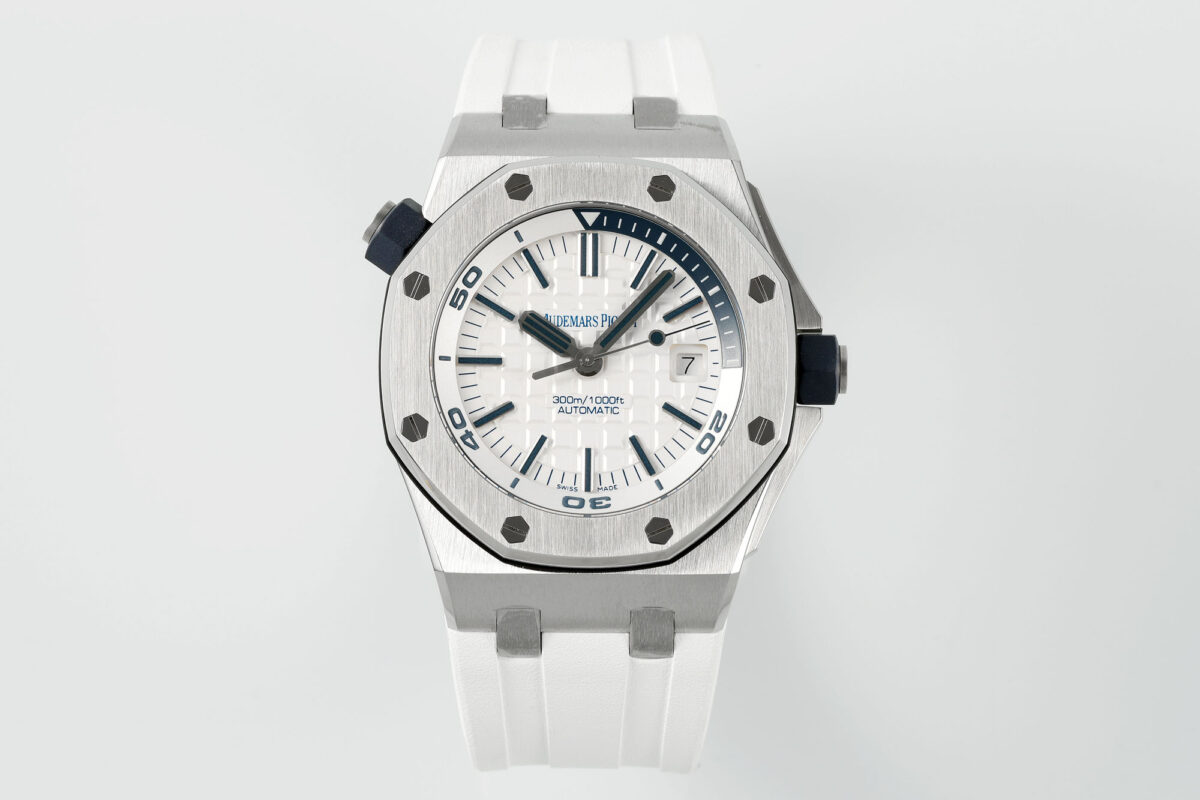


Audemars Piguet Super Clone Watches Are Mostly About Geometry
A Royal Oak looks simple until two versions are sitting next to each other. The octagonal bezel, exposed screws, integrated bracelet and tapisserie dial are all familiar. Getting those pieces to work together is the harder part.
A case can be only slightly too tall and make the whole watch feel heavier. The bracelet can leave the case at the wrong angle and make it wear larger than the dimensions suggest. A bezel with soft edges can change the character of the case even when the dial looks good.
That is why Audemars Piguet super clone watches are better judged as complete shapes rather than a collection of isolated specifications.
If you are still comparing brands, the broader range of super clone watches is the better starting point. Once AP is already the direction you want, narrow the reference first and compare versions of the same watch.
Royal Oak Case, Bezel and Bracelet Need to Work Together
On many watches, the bracelet feels like something added after the case. On a Royal Oak, it is part of the case design.
The first links should continue naturally from the lugs instead of projecting outward like a separate attachment. That transition affects both appearance and comfort, which is why a straight-on catalog photograph only tells part of the story.
Look at the bracelet from the side. The links should articulate naturally without appearing loose, and the taper should feel gradual as it moves toward the clasp.
The bezel creates a similar problem. Eight sides and eight screws make it instantly recognizable, but they also make proportion mistakes easier to notice. Start with the complete octagonal shape rather than zooming immediately into individual screws.
The bezel should look balanced around the dial. Brushed surfaces and polished bevels need enough definition that the case does not begin to look rounded or soft.
Thickness ties all of this together. It changes how high the bezel sits, how the bracelet falls away from the case and whether the watch looks refined or stacked.
For a Royal Oak super clone, a side-profile photograph can therefore be as useful as the front view. Look at the bezel, mid-case, caseback and first bracelet links together. They should look like one design rather than several thick layers placed on top of each other.
Royal Oak Dials Need Texture and Balance
The tapisserie dial gets plenty of attention on an AP super clone, and it deserves it.
The pattern should have visible depth instead of looking like a flat grid printed onto the surface. Straight-on photographs help with marker placement and spacing, while angled images are more useful for seeing how the texture changes with light.
Dial color is harder to judge from one photograph. Blue, grey, green and black can all shift depending on lighting. A blue dial may appear much brighter in one set of images and considerably darker in another.
That makes texture and layout more reliable comparison points than one exact shade captured under studio lighting.
On references with a date, the window deserves attention once the overall dial looks right. Check the position of the opening, the centering of the numeral and how the date sits against the surrounding tapisserie pattern.
The grid gives the eye a natural reference, so a badly positioned date can become surprisingly noticeable even though the window itself is small.
Royal Oak and Royal Oak Offshore Need Different Standards
A standard Royal Oak and a Royal Oak Offshore should not be judged with the same expectations.
The regular Royal Oak depends heavily on proportion. The case needs presence without looking unnecessarily tall, and the bracelet should remain visually integrated with the case.
The Offshore is intentionally heavier. Its larger case, pushers, guards and more aggressive styling are part of the design rather than problems that need to be corrected.
A thickness that could make a standard Royal Oak look clumsy may be completely normal on an Offshore.
The same applies to chronograph references. Once subdials and pushers are added, the side profile deserves more attention. The pushers should look like part of the case rather than oversized additions, and the extra movement complexity should not make the watch appear unnecessarily bulky for the reference.
Broad comparisons across every Audemars Piguet super clone therefore do not tell you much. Compare Royal Oak with Royal Oak. Compare Offshore with Offshore. The family and reference come first.
15500, 15510, 15202 and 16202 Should Not Be Compared the Same Way
“Royal Oak” covers watches with noticeably different proportions.
A 15500-style watch has a different wrist presence from a thinner 15202 or 16202-style reference. The 15510 brings its own changes, while earlier watches such as the 15400 belong to another point in the design’s development.
Those differences are supposed to exist.
If you want a modern 41 mm time-only Royal Oak, the AP 15500 Super Clone gives you a much more useful comparison point than a thinner Jumbo-style reference.
If the slimmer Royal Oak profile is what attracts you to the design, compare it with the correct family instead. The AP 15202 Super Clone is a 39 mm reference and belongs to a different proportion set.
Using one Royal Oak as the standard for every other Royal Oak can make genuine reference differences look like manufacturing errors.
The same principle applies before comparing factories. Get the reference right first.
APSF, ZF and Other AP Factories Come After the Reference
APSF, ZF and other factory names appear early in most AP research. They can be useful because they identify the production version being discussed.
They should not become the first decision.
A factory may execute one Royal Oak reference particularly well and be less convincing on another. Components can change between revisions too, so a factory reputation built around one model does not automatically transfer to the entire AP catalog.
Start with the watch you want.
Choose the reference, material, dial and whether you want a time-only or chronograph layout. Once that is settled, compare the available versions for that exact model.
That makes APSF, ZF and other factory names useful instead of turning them into shortcuts.
Different Audemars Piguet Super Clone Watches Need Different Checks
Steel is not the only material in the AP range. Ceramic, rose-tone and frosted finishes change what deserves attention.
Black ceramic affects the way case edges and surface transitions appear under light. A frosted finish is different again because the texture across the metal becomes part of the design itself.
Consistency matters more than forcing the finishing standards of a brushed steel Royal Oak onto every material.
Chronographs add another layer because the subdials, pushers and movement functions become part of the comparison. A time-only Royal Oak does not need the same inspection priorities.
The reference should determine what gets checked. One universal list for every AP model misses too much.
QC and Video Matter on the Individual AP Super Clone
Factory reputation can narrow the field, but QC is about the specific watch that will actually be sent.
Start with the complete watch.
Does the case shape look balanced? Does the bezel sit naturally around the dial? Does the bracelet leave the case at the right angle? Does anything look obviously misplaced before you zoom in?
Then move closer. Check bezel finishing, screw placement, tapisserie texture, marker alignment, date position where applicable, bracelet links, clasp and crown.
Chronograph models add the pushers and chronograph operation. Ceramic or frosted models deserve additional attention to surface consistency.
The goal is not to find the smallest possible imperfection. It is to see whether the entire watch works together.
Video is particularly useful with a Royal Oak because so much of the design changes as light moves across it. A static image can show marker alignment or date placement. Video can show how the bracelet falls, how tall the case appears from the side, how the polished bevels catch light and whether the tapisserie dial has visible depth.
Photos and video do different jobs. Used together, they make the individual-watch review much more useful than relying only on catalog images.
Choosing the Right Audemars Piguet Super Clone
Start with how you want the watch to wear.
If you prefer a slimmer and more restrained Royal Oak, look toward the thinner references. If you want the stronger presence of a modern 41 mm case, models such as the 15500 and 15510 make more sense.
If the heavier case, pushers and aggressive profile are part of the appeal, move toward the Offshore rather than trying to make a standard Royal Oak fill that role.
Then narrow the material, dial and time-only or chronograph layout.
Factory comes after those decisions.
That order keeps the comparison cleaner because you are looking at watches that are genuinely competing with each other rather than asking for one universal “best AP.”
A strong Audemars Piguet super clone is rarely convincing because of one spectacular detail. The case, bezel, bracelet and dial need to agree with each other. The finishing has to suit the reference, and the individual watch still needs to hold up when it reaches QC.
Reference first. Version second. Individual watch last.